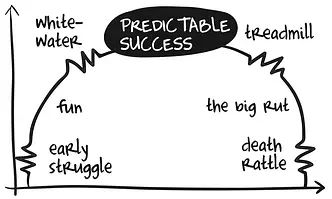

The other day I mentioned Discretionary Effort Level. I got the phrase from Les McKeown. If you’re a part of a growing an organization and haven’t anything from him or heard of the book predictable success, it’s a great framework for assessing what stage of organizational growth you’re at and what mentality you need to carry in that stage.
The seven stages are:
1) Early Struggle
2) Fun
3) Whitewater
4) Predictable success
5) Treadmill
6) The Big Rut
7) Death Rattle
Something to think about. What stage are you in? What mentality do you need for this stage? How do you approach this?
Busy Monster
When your calendar looks like Tetris.
But seriously, how are you guys doing at managing your busy monkey?
Discretionary Effort Level
How do you get the best with your employees?
There’s not a single answer to that question. Every team member has their own wants, needs, and goals that inform their actions as to why they show up every day. When team members begin to see the goal of the organization conflicting with their own personal goals you’ll get reduced efforts.
One action I’ve found that helps with this is acknowledgement. Generally if someone knows you know, and knows that you care, and trusts that it’s temporary, then they’ll go a little further than normal. If you don’t do this you’ll stop getting their discretionary effort left. That’s the other thing I tend to keep in mind as a helpful tool that frames my goals for a team member into understandable language.
That is the part of them that only they bring to the organization. How do we gain your discretionary effort level? Something as simple as asking “What do you need from me to offer your discretionary effort level in the tasks you have?” yields drastic and large insights about your staff’s needs.
How do you help your employees with giving more than they thought they could without trading away their own personal wants and desires?
Goodhart’s Law
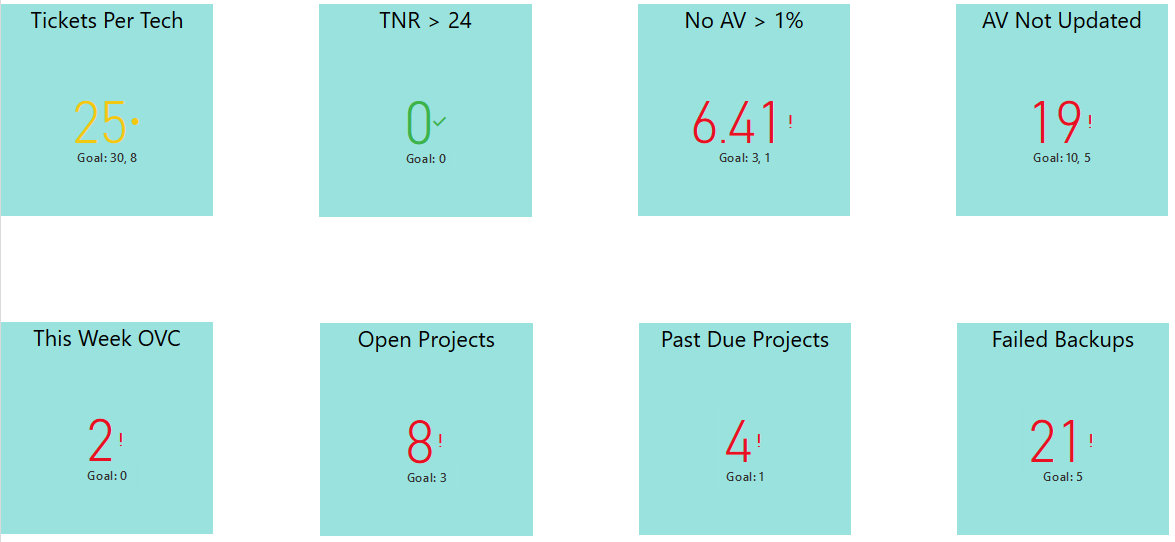
I was talking with one of my staff about some service design issues yesterday. The point that was brought up was about how some action around poor service is coming from a need to present numbers and I brought up the concept of GoodHart’s Law.
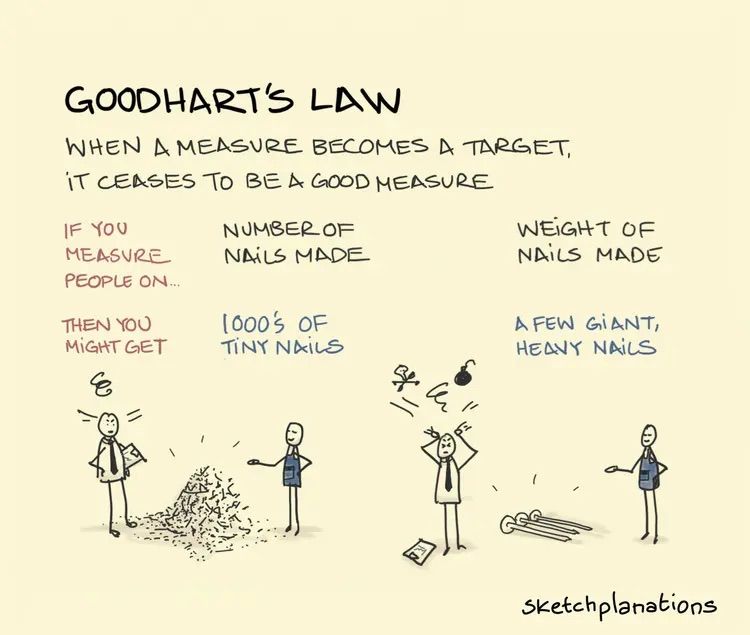
If you’ve never heard GoodHart’s Law it goes like this “When a measure becomes a target, it ceases to be a good measure.”
This has show to be true many times over. So if you’re dealing with a problem in your culture, service delivery, etc. Look at the incentives you’ve put in place by what your team believes to be the target.
Often i’ve found the better version is to have a less numerically clear ideal state as a target and the metrics inform if your distance to the ideal state.
E.G. “We never want a client to get off the phone and feel like their problem will never be solved. We want them to get off the phone with us and think ‘they have this.'”
Then you add metrics, not as goals, but as informers of the distance between where you are and the ideal future state.
Thoughts? Have you seen this in your own org?
Measure What Matters
There’s a trope that continues to track as sensical.
“Measure what matters.”
I was talking to someone the other day about a feature in a product and asked about reporting on it. There wasn’t any reporting against the feature yet. e.g. who used it and how it was used. The thing is, if it really was valuable, you’d want to track the results. Are you adding features without a thought about how to communicate the value the feature gives back out? If so, then the reality might be the feature is useless. If it were useful you’d want a feedback loop to understand how.
Adding something custom without a mechanism to report back it’s use tells me it’s busy work.
What do you think? Is this true? Have you ever found anything valuable for which you didn’t have a subsequent reporting mechanism?
New Year. Clean Board.
First full week of the year starts now. You have a clean whiteboard. What are you filling it with?
Stories behind the Stuff
I used to think this house was obscene. Clark Griswold unrestrained. Then I heard the story behind the lights. The family who lived there started this so their daughter could see the lights while in the hospital one Christmas. It’s amazing glow knowing the story behind something, having the context, gives something an entirely meaning.
How true is this also for people? What are the stories you don’t see. How could they change your experience of a person? What are the other questions you might need to ask yourself or those you lead?

Make Sense of Negative Turns
Victor Frankl’s thesis about life is that negative turns in a person’s life are always bearable if they have a context, if they’re in a story framework. This is also true about your career. Take some time and think through the positive and negative turns of your career journey. You’ll be able to pull out some patterns that can help inform what you should do in the future and what you shouldn’t do in the future.
How often do you step back and take a breath to review? How aware are you of your own journey here?
Revenue Quality
Not all revenue is created equal and not all money is as green.
Business is not about how much you make, it’s about how much you keep.
There are times that you face a realistic situation where you drop lower topline and increase earnings below the line. Just takes knowing your numbers enough to see the path.
Business owners, ask yourself this: if you took a hit on your revenue but your earnings grew, would you do it?
First Principles
Employee asking me about their internet being out for a chunk of Monday. Worried they’re going to get docked pay.
First question I had: Aren’t you salaried?
Them: Yes.
Me: I don’t know why that matters then.
Them: Ok that’s cool.
Next question I had: In those situations, do you have a laptop?
Them: Yes.
Me: So you could go offsite somewhere with internet in the future?
Them: I can go to ________, or to family’s.
Me: I know that’s not ideal , neither is doing nothing for the same reason.
Them: True on both. I’ll go to family’s in the future.
Two things for us
1. Let’s think by first principles –> If they’re salaried, stop thinking about hours as directly.
2. Ask questions that help your staff begin to solve their own problems. –> If you see an employee just sitting there because of something external. Push them to a place where they have to think about that. Let them solve it